

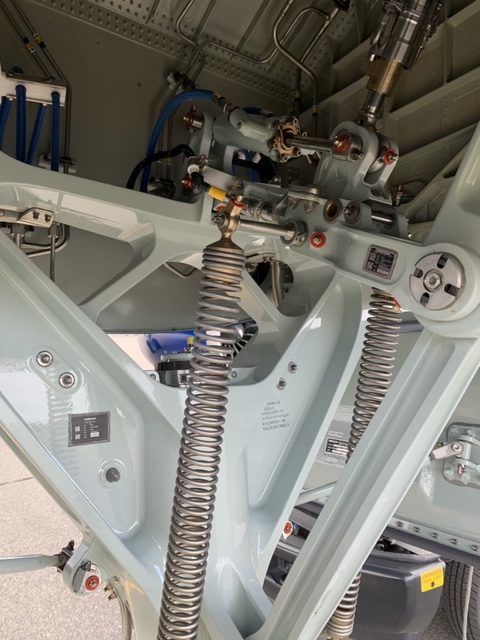
Landing gear is one of the hardest-working systems on any aircraft. It absorbs impact on touchdown, supports steering during taxi, and operates through repeated cycles of extension and retraction in changing temperatures, weather conditions, and maintenance schedules. Because the system is constantly under stress, reliable position feedback is not optional. It is one of the basic requirements for safe operation.
That is why position sensors have become such an important part of modern landing gear assemblies. They help flight crews, maintenance teams, and system controllers confirm where the gear is, how it is moving, and whether it is performing within expected limits. In practical terms, better sensor data supports safer landings, more accurate troubleshooting, and faster return-to-service decisions.
Why accurate gear position feedback matters
Landing gear is not just a set of mechanical structures. It is part of a larger aircraft system that includes hydraulics, actuators, brakes, steering components, and cockpit indications. If the position feedback is delayed, inconsistent, or inaccurate, the consequences can range from nuisance maintenance events to serious operational risk.
Reliable sensors help confirm gear extension, retraction, and transitional movement. That information supports cockpit indications, maintenance diagnostics, and automated system checks. In fleets with tight schedules and high utilization, even a small reduction in troubleshooting time can have a measurable impact on aircraft availability.
Where position sensors support landing gear performance
Different aircraft platforms use different architectures, but the same general principle applies: the aircraft needs dependable data from moving components. Position sensors can support monitoring across several areas:
- Gear extension and retraction confirmation during normal flight cycles.
- Nose gear steering position and response consistency during taxi operations.
- Actuator movement tracking for maintenance diagnostics and functional testing.
- System health checks after overhaul, component replacement, or line maintenance.
When sensors are matched correctly to the application, they provide repeatable performance even in environments with vibration, temperature swings, moisture, and contamination. That stability becomes especially important in regions where fleets operate in hot climates and under demanding turnaround schedules.
What operators and MRO teams should evaluate
Not every sensor that meets a basic dimensional requirement will deliver the same long-term value. Engineering and procurement teams usually need to look beyond fit and price. The better question is whether a part can keep performing under real operating conditions over time.
Some of the most important factors include:
- Measurement accuracy and repeatability across the required operating range.
- Resistance to vibration, shock, and temperature extremes.
- Compatibility with the aircraft system, mounting arrangement, and maintenance documentation.
- Availability of traceability, certification, and reliable technical support.
These factors matter because landing gear maintenance rarely happens in ideal conditions. Teams often need to make fast, confident decisions during scheduled checks, urgent repairs, or aircraft-on-ground events. A sensor that is difficult to source, lacks documentation, or performs inconsistently can create delays that extend well beyond the cost of the component itself.
How better sourcing reduces downtime
For many operators, the sourcing challenge is just as important as the engineering challenge. Even when the right part number is identified, delays in paperwork, lead times, or certification can hold up the job. That is why fleet support programs increasingly focus on traceable sourcing, dependable logistics, and documentation readiness.
For landing gear-related components, a practical sourcing strategy often includes:
- Working with suppliers that understand aerospace traceability requirements.
- Confirming interchangeability and approved documentation before the part is needed.
- Maintaining visibility on stock position and delivery commitments.
- Planning alternatives for urgent requirements and AOG scenarios.
When procurement and engineering teams stay aligned, operators gain more than a spare part. They gain a faster path to installation, inspection, and service recovery.
Position sensors and the move toward smarter maintenance
The aviation industry continues to move toward condition-based maintenance and better system visibility. In that environment, reliable sensor performance becomes even more valuable. The goal is not simply to know whether the landing gear moved. It is to understand how the system is behaving over time and to spot issues before they become larger disruptions.
That is one reason why dependable landing gear sensing solutions remain a priority for airlines, MRO organizations, and specialized sourcing teams. Better data supports better maintenance decisions, and better maintenance decisions support safer, more predictable operations.
Final takeaway
Landing gear reliability depends on more than strong mechanical design. It also depends on the quality of the feedback coming from the system. Position sensors help bridge the gap between movement and decision-making by giving crews and technicians dependable insight into how the gear is performing.
For operators focused on safety, uptime, and maintenance efficiency, that makes accurate and well-supported sensing technology a practical investment rather than a secondary detail.
Featured image credit: “A220 Forward Landing Gear” by Blervis via Wikimedia Commons, licensed CC BY-SA 4.0.