

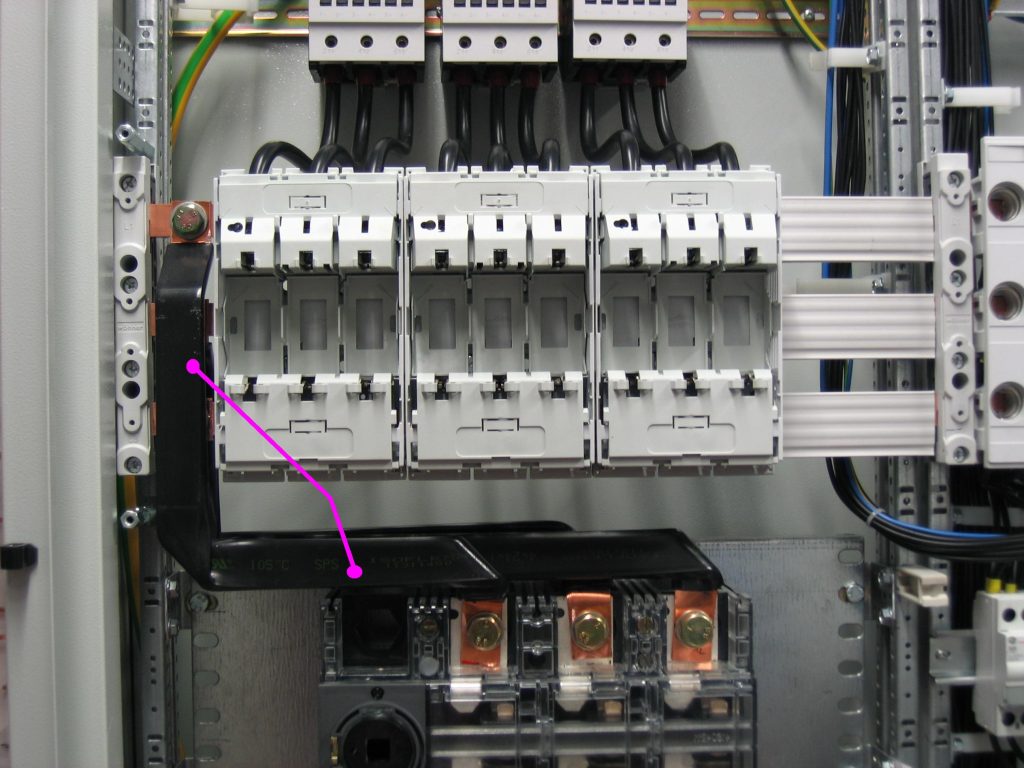
As aircraft systems continue to move toward higher electrical loads, engineers are rethinking how power should be routed inside compact and performance-driven platforms. Traditional cable-heavy layouts still have a place, but they are not always the most efficient answer for modern power conversion, battery support, and high-current distribution. That is one reason laminated busbars are receiving more attention in aerospace power system design.
A laminated busbar is not simply a rigid conductor replacing wire. It is a structured power-distribution solution that can improve packaging, reduce electrical losses, and bring more consistency to assembly. For aerospace programs focused on reliability, maintainability, and tighter integration, those benefits are increasingly practical.
Why aerospace programs are looking beyond cable bundles
As electrical architecture becomes more complex, large cable groupings can introduce challenges in routing, repeatability, and service access. Cable bundles also make it harder to control spacing, current paths, and installation consistency in tightly packaged assemblies.
Laminated busbars address those challenges by using flat conductive layers separated by insulation. This creates a defined geometry for current flow and helps engineers manage space more deliberately. In systems where every millimeter matters, that structured layout can simplify the overall design.
Core advantages of laminated busbars
The value of a laminated busbar is not limited to appearance or neat packaging. It comes from the way the design supports electrical and mechanical performance at the same time.
- Compact power routing that can reduce congestion inside equipment enclosures.
- Improved repeatability from unit to unit during assembly and replacement.
- Lower parasitic inductance compared with less controlled conductor layouts.
- Better thermal behavior when the conductor geometry is engineered for the load.
- Cleaner interfaces for modules, converters, batteries, and auxiliary subsystems.
These benefits are particularly attractive in applications where weight, space, and efficiency all compete for priority. A more organized current path can help reduce integration complexity across the entire system.
Where laminated busbars fit in aerospace power distribution
More-electric aircraft concepts, advanced auxiliary systems, ground power equipment, and aerospace-adjacent power electronics all benefit from tighter and more controlled power distribution. Laminated busbars are often considered in areas where engineers need a combination of current-carrying capability and packaging discipline.
Typical use cases can include:
- Power converters and inverters that require stable, low-impedance current paths.
- Battery-related assemblies and energy storage interfaces.
- Auxiliary power distribution where compact installation matters.
- Electrical cabinets and support equipment that need repeatable internal layouts.
In each case, the busbar becomes part of the system architecture rather than just a passive conductor.
Design questions that should be answered early
Even when the concept is attractive, successful implementation depends on early engineering alignment. Busbars have to be designed around the actual electrical load, insulation requirements, mounting constraints, and service environment.
Before approving a configuration, teams usually need clear answers on:
- Expected current, voltage, and acceptable temperature rise.
- Clearance and creepage requirements for the environment and insulation system.
- Mechanical supports, fastening points, and vibration exposure.
- Interface details for terminals, modules, and maintenance access.
Answering those questions early reduces the risk of redesign later, especially in projects where multiple teams are working across electrical, mechanical, and supply-chain functions.
Why sourcing discipline matters
Unlike off-the-shelf wiring, laminated busbars are often application-specific or at least application-sensitive. That means sourcing strategy has to be part of the project conversation from the beginning. Lead times, fabrication tolerance, documentation, and revision control all have to be managed carefully.
A practical sourcing approach usually involves:
- Confirming technical drawings and revision status before production demand increases.
- Reviewing documentation and traceability requirements for the end application.
- Planning for spare support, replacement strategy, and urgent demand scenarios.
- Working with suppliers that can coordinate engineering clarification with delivery execution.
That is especially important when programs need fast turnaround, fleet support, or documentation consistency across multiple shipments.
Final takeaway
Laminated busbars are gaining importance because they solve real design and support problems. They help bring structure to high-current routing, improve packaging efficiency, and support more predictable assembly in compact aerospace power systems.
For organizations building or supporting electrically intensive platforms, the decision is not simply whether busbars look cleaner than cables. It is whether a more engineered power-distribution approach can improve reliability, maintainability, and supply-chain readiness over the life of the program. In many cases, the answer is increasingly yes.
Featured image credit: “Flexible insulated laminated busbars ‘ISOFLEXX'” by ANKAWU via Wikimedia Commons, public domain.